
image source, https://www.bikeworldiowa.com
We like riding different wheels here at Bike Cycling Reviews and the lighter the better, so when we got the chance of a ride on a pair of the top clincher wheels from Shimano we jumped at it. They are light, rigid, look great and the ride they give is quite spectacular. Read on to see what we have found.
First, you need to look at these wheels and you can see they are different, the strengthening round the spoke holes, the carbon and alloy mix of the rims, the smooth finish of the hubs and those red nipples, but let’s take a close look at the technology first.
The Tech Speck
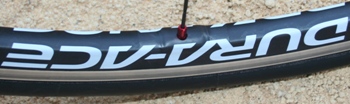
These wheels are said to be 1380 grams in weight (less Q/R), the label on the side of the rim says so, but the set we have came in at slightly less, so no complain there! The rims are made by a carbon and alloy laminating process, this keeps the weight down and maintains the braking performance without having to change brake blocks for special carbon pads as the brake surface is alloy, although these are mostly carbon rims.
The low weight is achieved with the reduced thickness of the alloy rim wall from 1.3 mm to 0.7 mm, then the carbon fiber is bonded to the alloy for the rigidity, weight saving and strength. The extra carbon reinforcing around the spoke holes strengthens the wheels so that there will be no worries about heavy riders or hard conditions.

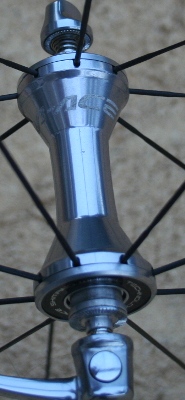
The spokes are steel butted and bladed for aerodynamics, they are also straight-pull so that there is no weakness at the end of the spoke at the head as in a normal spoke. The front-wheel has 16 radial laced spokes and the rear has 20, crossed twice, the spokes on the front wheel come straight out of the hub from a wide shell and the spoke heads are hidden by a cover so that the hub looks normal. The rear hub has a chunky flange system with blocks of alloy to anchor the spokes down, then for comfort, the spokes are crossed two times for a little give, the flanges are set wide for more rigidity. Shimano has now fitted a cassette body that will take a 9 or 10-speed cassette.
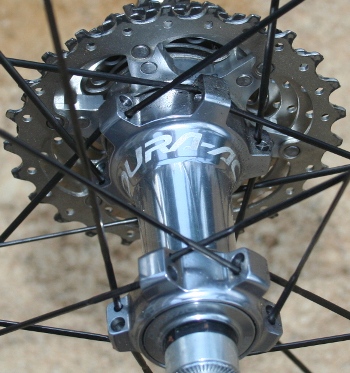
The hub bearings have to labyrinth double contact seals that are low friction so that no water will enter the bearings and there is minimal friction. The bearings are treated with Borozon, giving a smooth finish for top bearing performance. The hub body itself is a cold-forged and machined aluminum hub shell with a 7075 oversized alloy axle.
The nicest touch and criticism are the red nipples, they look very nice, but if you look at many wheels they have internal nipples, the spoke disappears into the rim. These wheels have the old fashioned visible nipples; this could be for strength although the internal nipples look neater. Another nice but pointless touch is the etched Dura-Ace on one side of the inside of the hub which no one will see, except when stationary.
What Do They Feel Like to Ride?
Well, they ride very well, we tested them fitted with Continental Grand Prix 4000s tires and we used them on a carbon Time bike and a Carbon Scott Addict on the same course that we tested other wheels which has a hard climb with steep sections, a fast descent and some fast flat roads and some bad surfaces, basically it has it all.
They feel fast and light and when hitting the climb there was no feeling of drag, they performed like a carbon wheel, not an alloy/carbon mix. On the descent the wheels go where you want them too, no fighting the steering, swooping through the bends they felt very lively.

The place they felt the best was on the rough roads, they seemed to take all the little bumps and uncomfortable vibrations from the ride, comfortable and positive. When sprinting with some wheels you can feel the rear wheel flex from side to side as you put the pressure on and when climbing out of the saddle and putting your weight on the front wheel you can feel some lateral give, but with the Shimano Dura-Ace 7850’s there is no movement, but the wheels still have that built-in comfort. The wheels felt the same on both bikes, so there were no complaints.
Other Dura Ace Wheels
Shimano also manufactures a 50 mm deep-section carbon rimed Dura-Ace wheelset for tubular tires and also a Dura-Ace Scandium road wheelset for tubeless clincher tires. So there are a few different Shimano Dura-Ace wheelsets to choose from.
Our Overall View
The Dura-Ace wheels are very good and not too expensive, they look the part as the red nipples tie in with the red decals on the rim, the hubs are silver and that goes nicely with the silver brake surface and the very functional quick releases, so they are stylish, perform well, are light and not too expensive.
Our Vote: 9 out of 10, those nipples lose a point.

